
CubeLab Pro
Photoactivated Homogeneous Chemiluminescence Multi-Mode Analyzer
Online ordering is not available yet. Contact sales to confirm inventory, taxes, shipping, and procurement details.
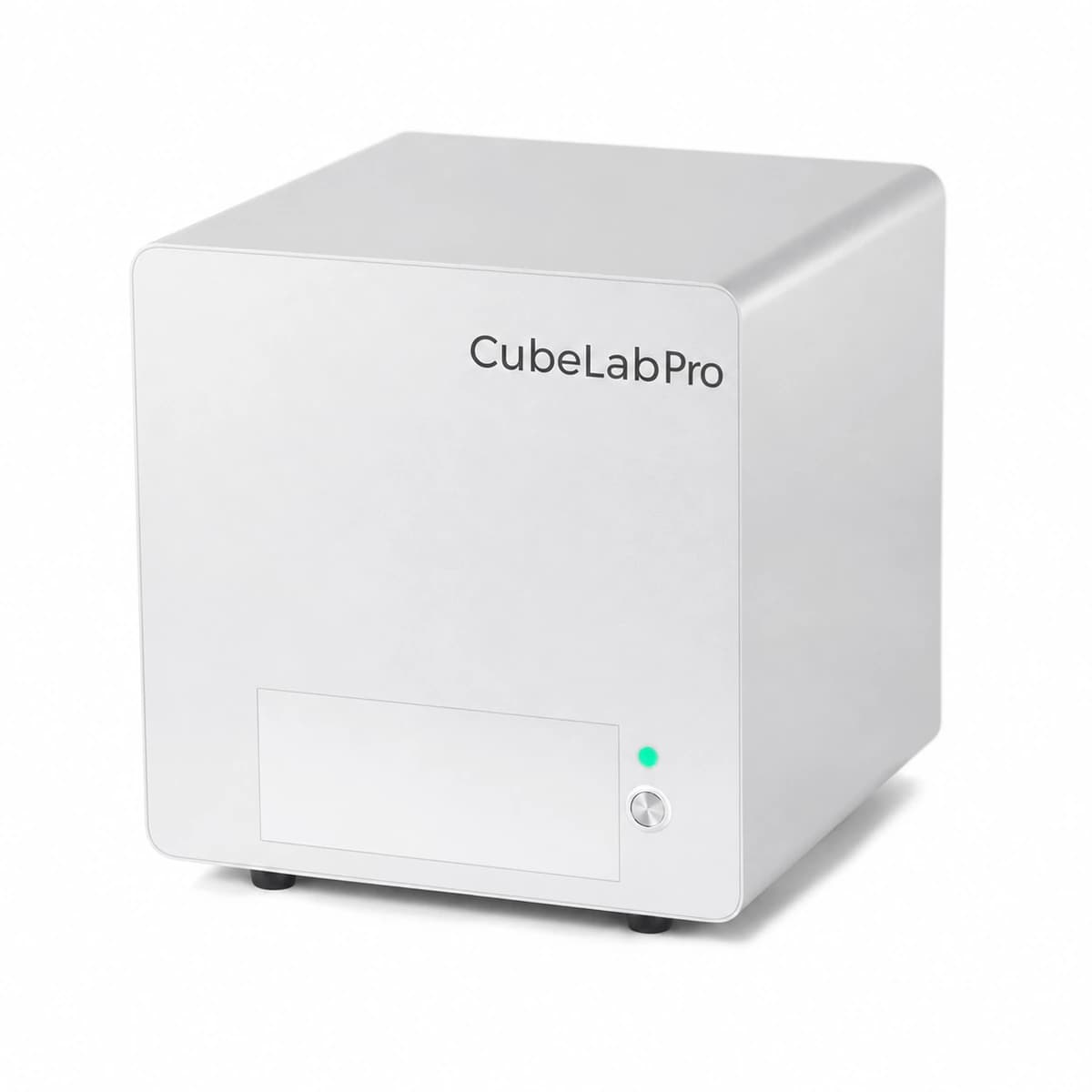
Excl. TaxCubeLab Pro integrates biochemistry, photoactivated homogeneous chemiluminescence, and dual-mode microscopy in a 33 cm cube. A wash-free homogeneous luminescence method, fluidics-free architecture, single-test lyophilized reagents, and dual-infrared in-chamber monitoring support a compact and structured workflow for an expanded immunoassay menu.
- Biochemistry, photoactivated homogeneous chemiluminescence, and bright-field/fluorescence microscopy
- Homogeneous chemiluminescence without wash or separation steps
- No conventional fluidics or wash lines
- Automatic position and optical calibration with dual-infrared in-chamber monitoring
- Single-test lyophilized reagents and cross-platform App control
* Professional installation and training included.

One Instrument. Three Technologies. A Broader Immunoassay Menu.
Biochemistry, photoactivated homogeneous chemiluminescence, and cellular imaging working together in a 33 cm cube
BUILT FOR MULTI-MODE POINT-OF-CARE TESTING
Bring a Broader Range of Testing into a More Compact Space
CubeLab Pro combines three detection modes, wash-free homogeneous luminescence, and software-based control for flexible deployment in primary care, outpatient settings, and smaller laboratories.
3
Detection Technologies
Biochemistry, photoactivated homogeneous chemiluminescence, and dual-mode microscopy
33 cm
Cubic Footprint
Multiple detection capabilities within limited bench space
19 kg
Instrument Weight
Balances structural stability with flexible placement
15–20 min
Combined Multi-Mode Run
Multiple test types coordinated within one workflow
MULTI-MODE DETECTION
From Soluble Biomarkers to Cellular Morphology on One Platform
CubeLab Pro organizes complementary detection technologies into one workflow, allowing each assay to use the appropriate mode or multiple modes to run together when needed.
BIOCHEMISTRY
Biochemistry
Primarily uses serum or plasma for common chemistry and related-protein assays in approximately 10–15 minutes.
HOMOGENEOUS CLIA
Photoactivated Homogeneous Chemiluminescence
Performs immune recognition and signal acquisition in a homogeneous system without conventional wash or separation steps.
BRIGHT-FIELD
Bright-Field Microscopy
Uses whole blood for five-part differential CBC testing in under 5 minutes.
FLUORESCENCE
Fluorescence Microscopy
Uses whole blood for multi-channel fluorescence imaging and assisted CTC identification.
PHOTOACTIVATED HOMOGENEOUS CHEMILUMINESCENCE
Keep Immune Recognition and Signal Reading in One Homogeneous System
Target-mediated immune recognition brings signal components into a readable spatial relationship within the homogeneous reaction, and light activation generates a chemiluminescent signal. Reaction and signal acquisition proceed continuously in one system without repeated washing, magnetic separation, or other solid-liquid separation mechanisms, reducing wash-line hardware, wash-solution management, and associated maintenance.
01
Sample Addition and Reagent Reconstitution
The sample contacts the single-test lyophilized reagent to establish a consistent starting point for the reaction.
02
Homogeneous Immune Recognition
Target-mediated specific recognition establishes a readable spatial relationship among signal components in solution.
03
Light-Activated Luminescence
The reaction system is illuminated under controlled conditions, triggering chemiluminescence from signal components that meet the reaction criteria.
04
Signal Acquisition and Calculation
The optical module captures luminescence, and the system combines the signal with calibration information to calculate the result.
BRIGHT-FIELD CELL IMAGING
See Cellular Morphology Behind a Five-Part Differential
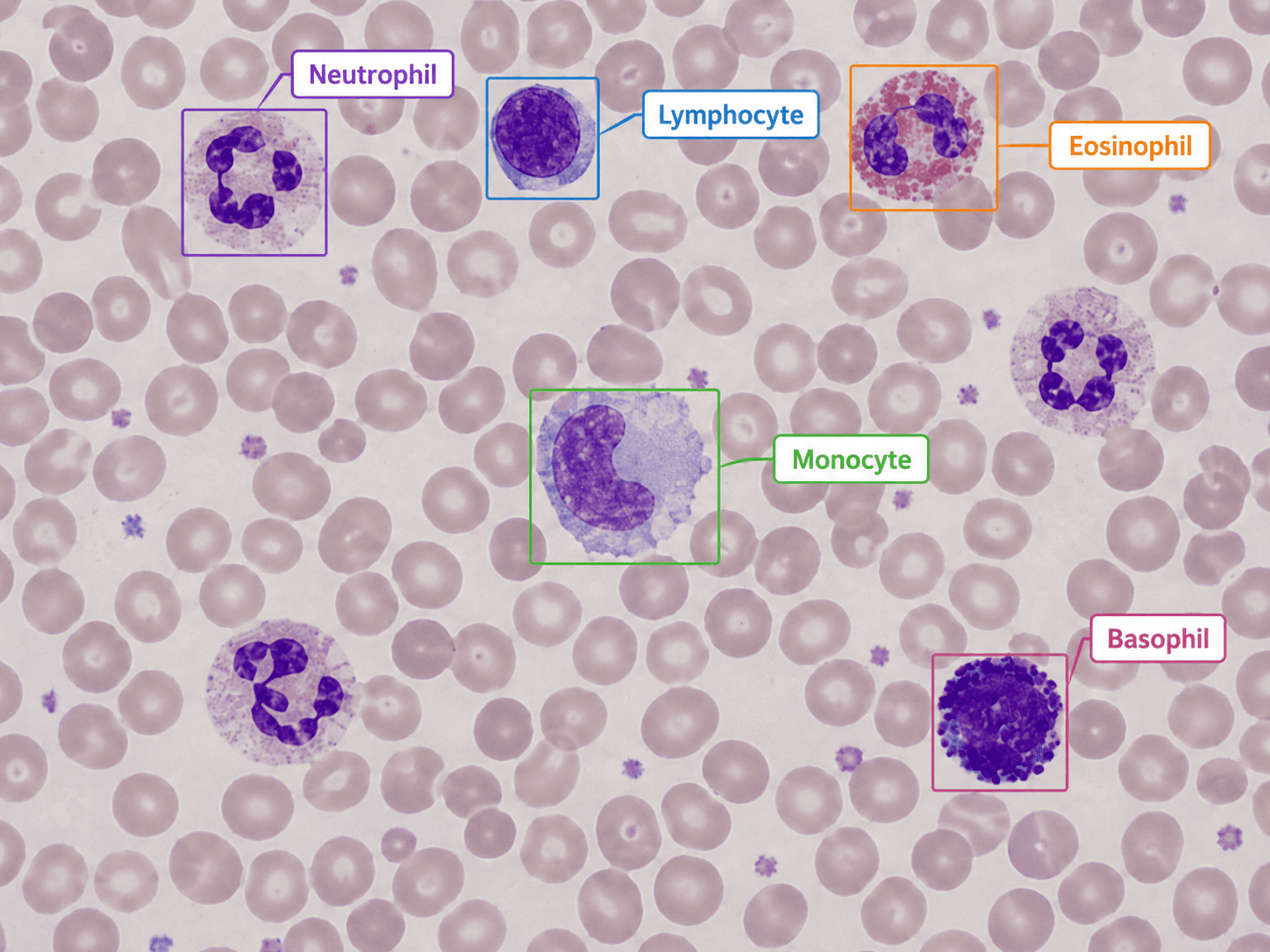
Bright-field microscopy captures cellular images from whole blood and identifies neutrophils, lymphocytes, monocytes, eosinophils, and basophils, providing a visual basis for five-part differential CBC results.
From the original cellular image to the classification output, results remain visually interpretable. CBC testing is completed in under 5 minutes for point-of-care settings that need timely hematology information.
Five-Part Differential
Identifies and differentiates five white blood cell classes to support CBC reporting.
Whole-Blood Sample
A cellular morphology workflow designed around whole-blood specimens.
Under 5 Minutes
Rapid access to hematology information within a compact workflow.
Visual Results
Retains cellular images and classification annotations for review and interpretation.
FLUORESCENCE CELL IMAGING
Multi-Channel Fluorescence Imaging for Assisted CTC Identification
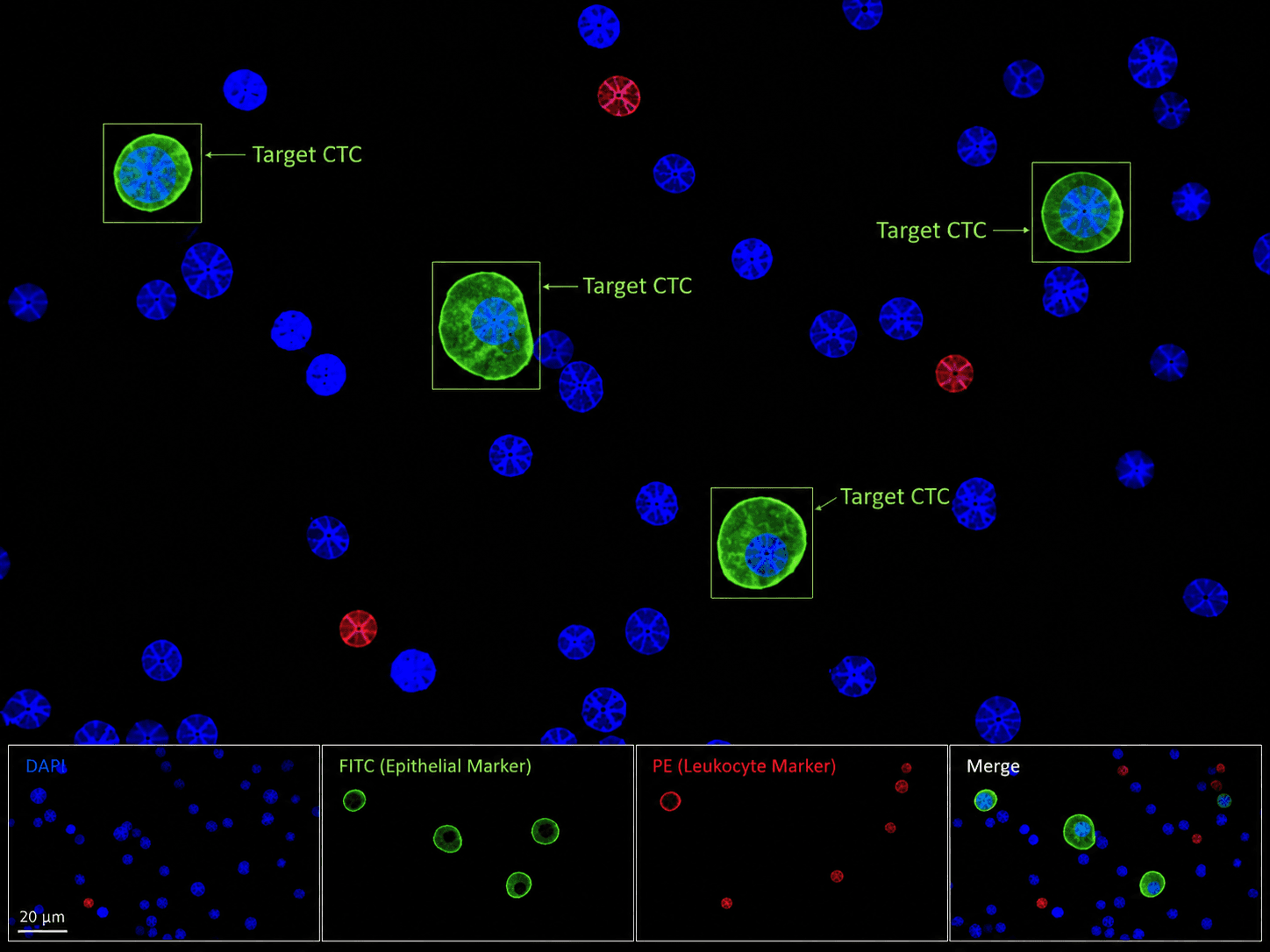
Fluorescence microscopy combines DAPI, FITC, and PE acquisition from whole-blood samples. Merged channels visualize nuclear, epithelial-marker, and leukocyte-marker signals to support identification of circulating tumor cells (CTCs).
Each fluorescence channel reveals a different biological marker. The merged image turns distributed signals into clearer cellular characteristics and supports a structured path from image acquisition and target localization to result review.
DAPI Channel
Visualizes nuclear signals to establish cellular location.
FITC Channel
Visualizes epithelial-marker signals to support target-cell identification.
PE Channel
Visualizes leukocyte-marker signals to help differentiate cell types.
Channel Merge
Combines multiple fluorescence channels for clearer target-cell characteristics.
AUTOMATED PREFLIGHT
Before Testing Begins, the Instrument Checks Itself
CubeLab Pro completes position calibration, optical calibration, and loading verification before a test begins, reducing preparation steps that depend on operator experience.
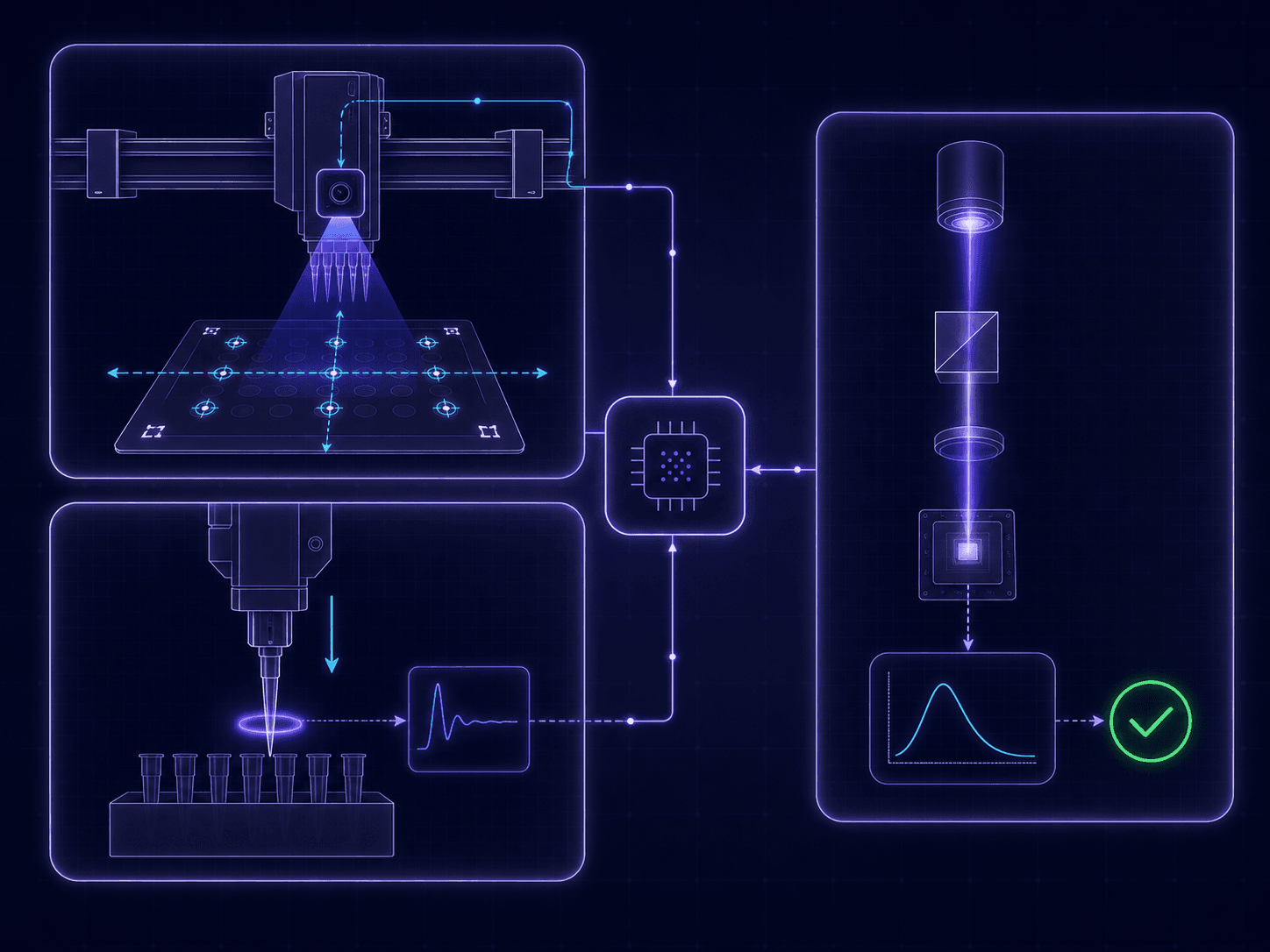
01
Position Homing and Calibration
Visual references and motion control establish a consistent coordinate basis for subsequent operations.
02
Optical State Calibration
The optical modules are checked before testing to support stable signal acquisition across chemistry, luminescence, and microscopy.
03
Sample and Reagent Verification
Dual infrared cameras help determine whether samples, reagents, and consumables are placed as required.
04
Run When Ready
Testing begins after key conditions are confirmed, with in-chamber monitoring continuing throughout the run.
IN-CHAMBER AWARENESS
Two Infrared Cameras Keep Watch on What Happens Inside
Automation is not only about moving mechanisms. It is about knowing whether each step is happening as expected.
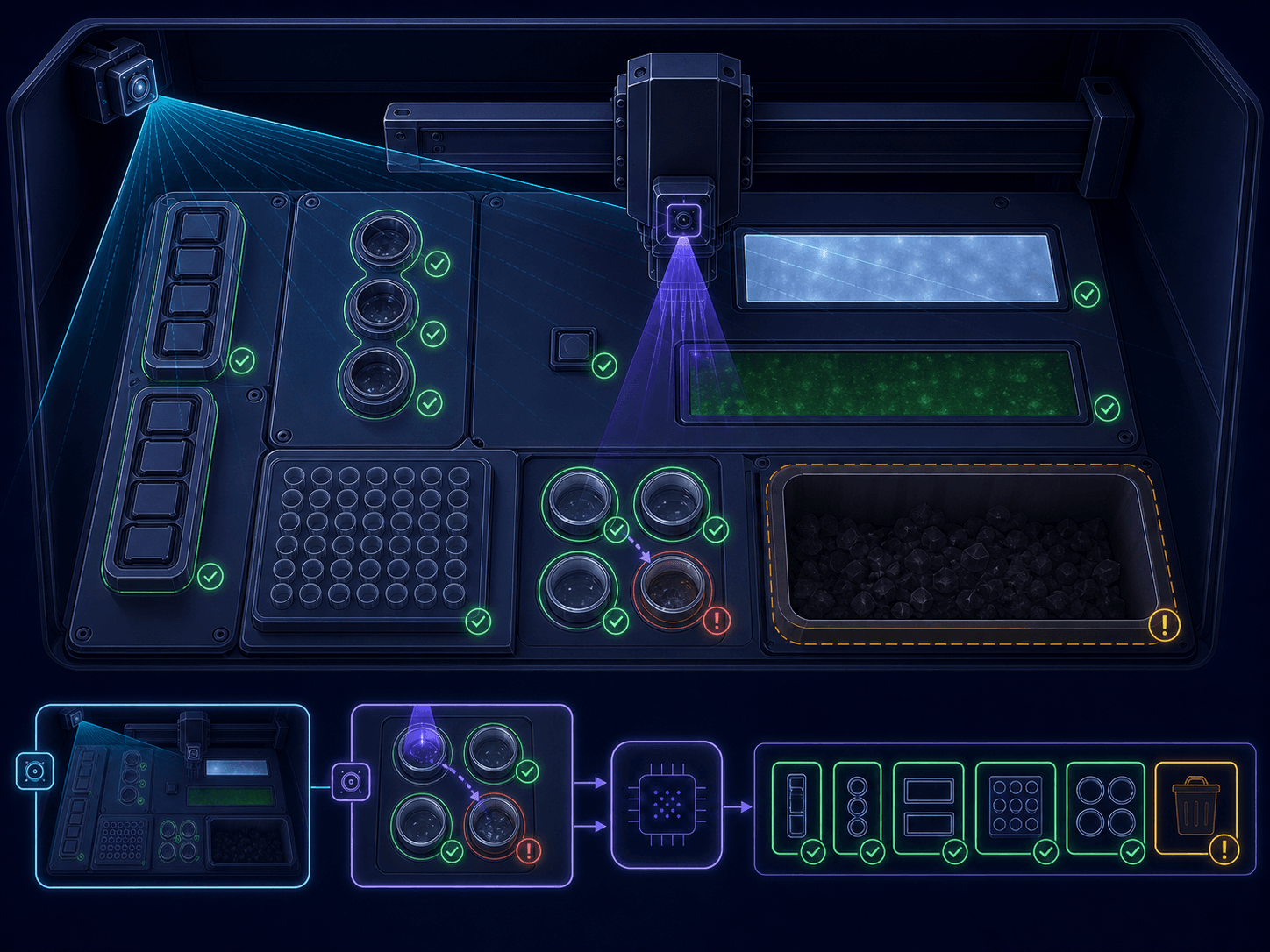
Two infrared cameras cover key operating areas. They verify sample and reagent placement before testing, observe consumable, waste, and abnormal states during operation, and translate conditions that require attention into clear guidance.
Loading Verification
Helps confirm that samples and reagents reach their designated positions.
Consumable Status
Observes consumable preparation and use to reduce missed steps.
Waste Monitoring
Tracks the waste area and provides prompts for subsequent handling.
Exception Awareness
Helps identify in-chamber events that deviate from the expected workflow.
FLUIDICS-FREE ARCHITECTURE
Remove the Fluidics. Remove an Entire Category of Maintenance.
CubeLab Pro does not depend on conventional fluidics, pumps, valves, or wash lines. A more direct architecture means fewer potential failure points and a clearer maintenance model.
LESS COMPLEXITY
No Conventional Fluidics
Reduces system complexity associated with tubing, pumps, valves, and connectors.
NO WASH LINES
No Wash-Line Dependency
Homogeneous luminescence and chemistry testing do not rely on conventional wash lines.
FEWER FAILURE POINTS
Less Risk from Clogs and Leaks
Reduces potential failure points related to clogging, leakage, and aging tubing.
EASIER SERVICE
More Direct Maintenance
Reduces routine work centered on flushing, unclogging, and replacing fluidic components.
SINGLE-TEST LYOPHILIZED REAGENTS
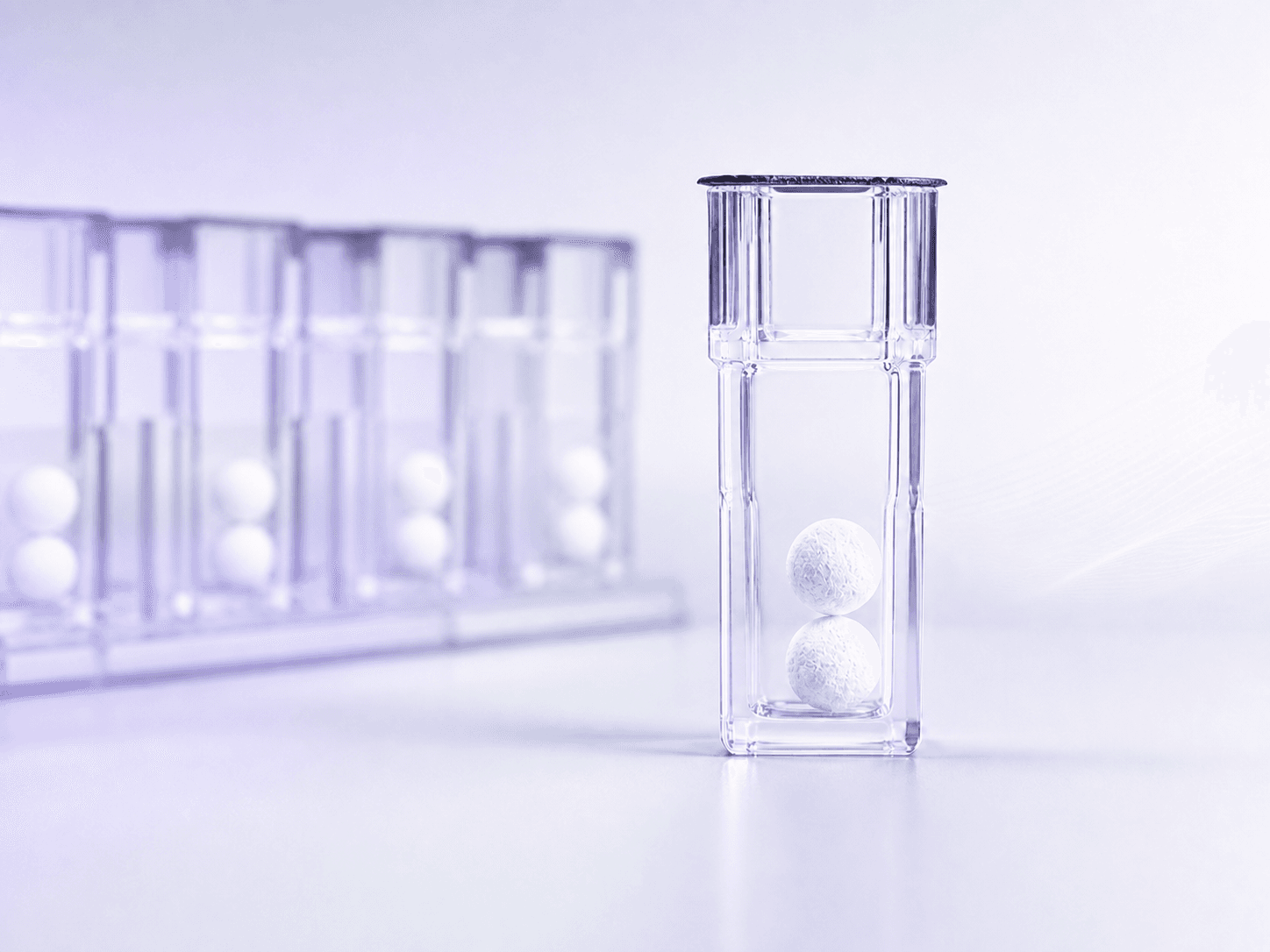
One Independent Lyophilized Reagent for Each Test
The single-test lyophilized format transforms complex liquid reagent management into a clearer, use-on-demand workflow.
Reagents support transport and storage at 2–30 °C, reducing cold-chain dependence. Each test uses an independent reagent, reducing bottle opening, aliquoting, onboard liquid management, and cross-batch handling.
2–30 °C
Ambient transport and storage support deployment across different regions.
Single-Test Format
One reagent unit corresponds to one test for a clear use relationship.
Use on Demand
Reduces bottle opening, reconstitution aliquoting, and liquid reagent management.
POCT Ready
Well suited to distributed, low- to medium-volume point-of-care workflows.
ESIO APP ECOSYSTEM
Control the Instrument from Devices You Already Know
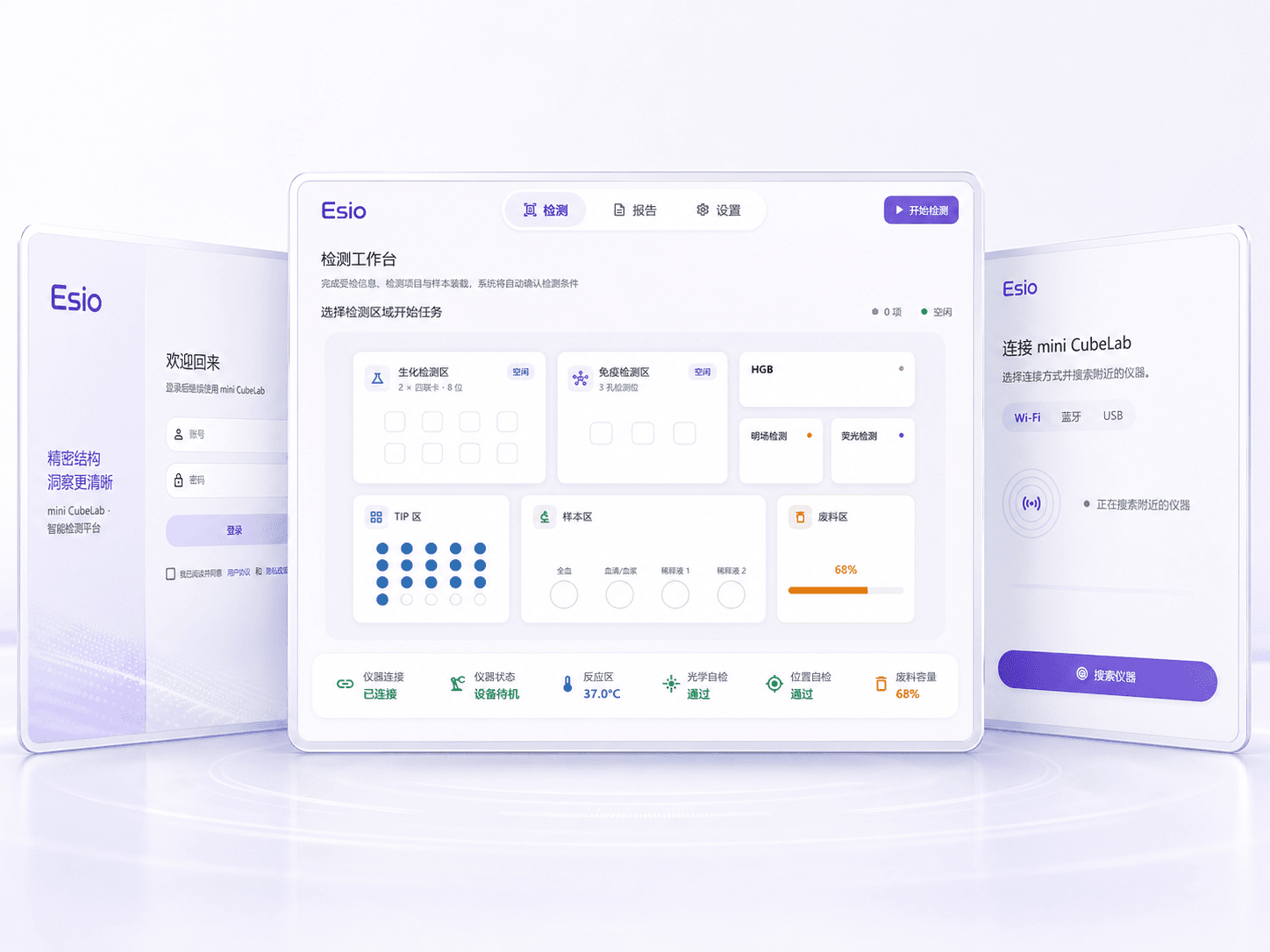
CubeLab Pro uses the Esio App for connectivity, test control, status review, and result management, keeping the hardware compact while allowing the software experience to continue evolving.
The App supports Windows, iOS, and Android. Depending on the deployment environment, the instrument can connect through Wi-Fi, BLE, USB, or Ethernet for fixed workstations, mobile devices, or local networks.
Cross-Platform
Supports Windows, iOS, and Android.
Multiple Connections
Supports Wi-Fi, BLE, USB, and Ethernet.
Clear Status
Review run stages, instrument status, and operating guidance in one place.
Result Management
Review and manage test results through a unified interface.
COMPACT 33 CM CUBE
A 33 cm Cube Brings Multi-Mode Testing to a Smaller Benchtop
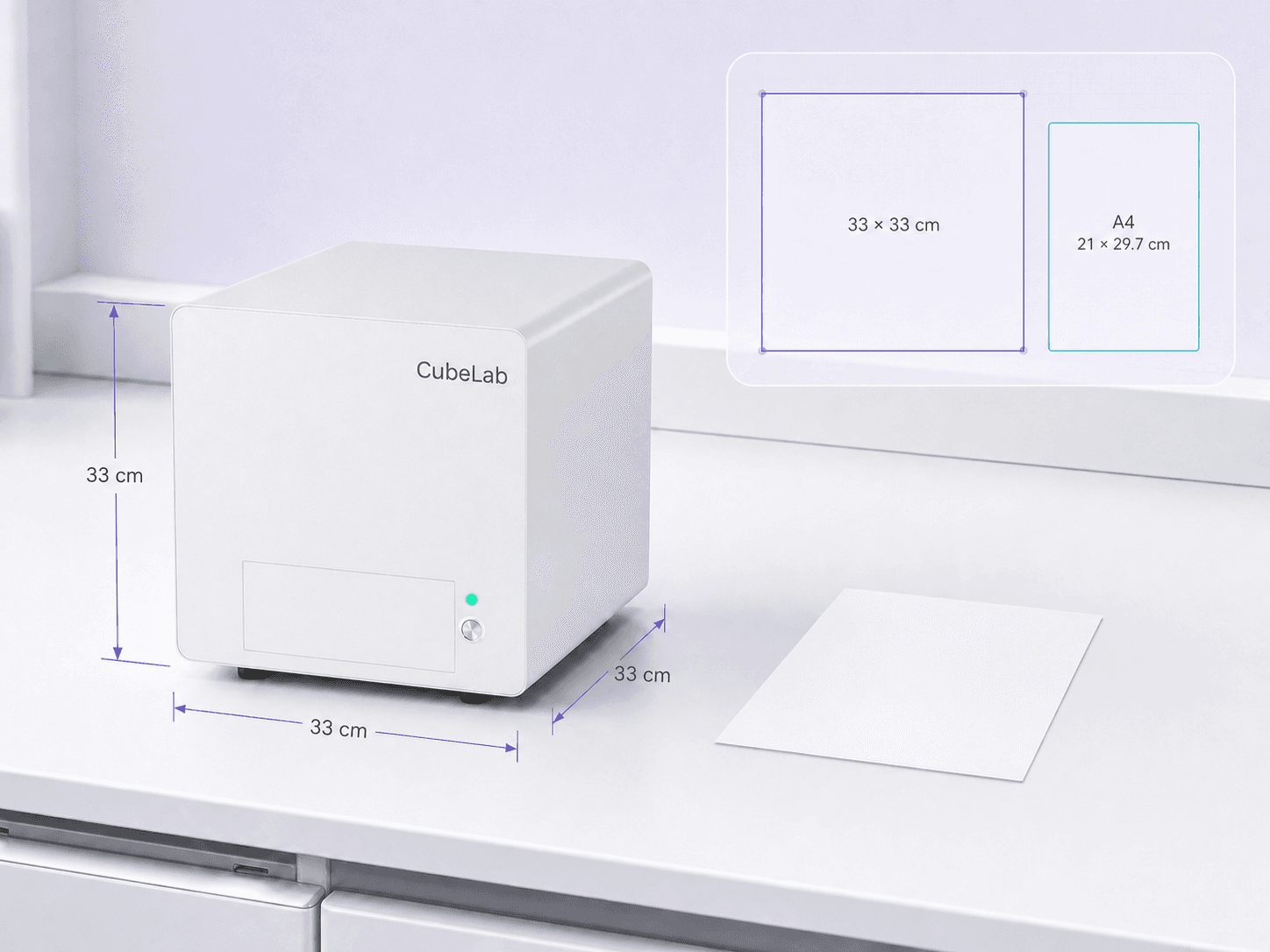
CubeLab Pro measures 33 cm in length, width, and height, integrating three detection technologies, automation, and in-chamber monitoring within a compact footprint.
A comparison with A4 paper makes the footprint easy to understand at a glance. The compact form supports deployment in primary care, outpatient settings, and smaller laboratories while preserving room for sample preparation and routine work.
33 × 33 × 33 cm
A regular cubic body simplifies benchtop planning.
Approx. 19 kg
Balances structural stability with deployment needs across settings.
Compact Footprint
Preserves working space for sample preparation and routine operation.
Flexible Deployment
Designed for outpatient care, primary care, and smaller laboratories.
POINT-OF-CARE DEPLOYMENT
Bring Testing Capability Closer to Where Patients Are
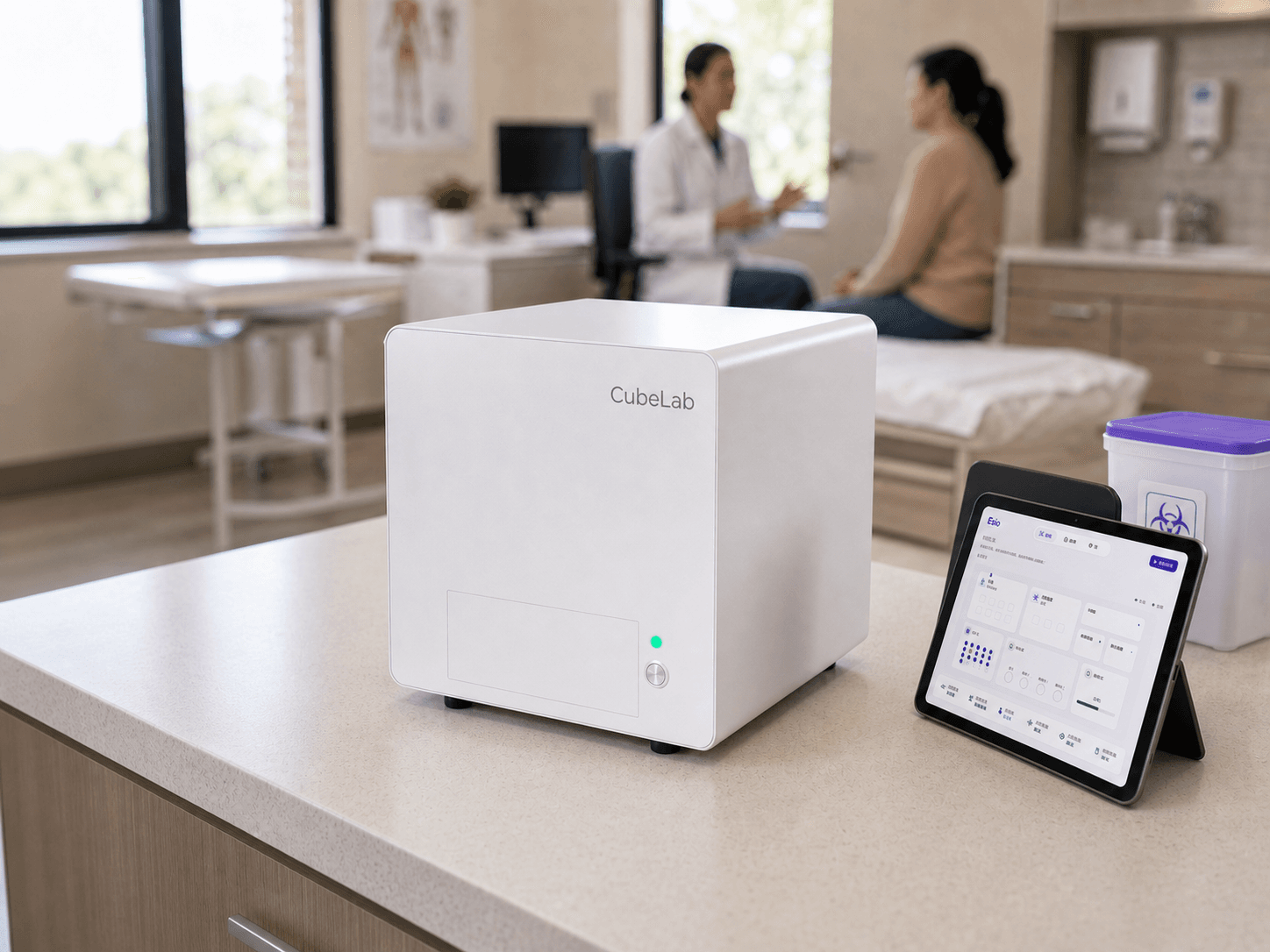
In primary-care and outpatient settings, CubeLab Pro can operate within routine clinical spaces, with the Esio App supporting instrument connection, test operation, status review, and result management.
A compact body, fluidics-free architecture, wash- and separation-free homogeneous luminescence, and single-test lyophilized reagents work together to reduce space and routine maintenance demands, helping multi-mode testing fit distributed point-of-care workflows.
Closer to Care
Place testing workflows in clinical spaces closer to patients.
App Control
Connect to the instrument and manage testing from familiar devices.
No Dedicated Large Room
The compact body fits routine consultation rooms or smaller testing areas.
Clear Maintenance Model
Fluidics-free architecture reduces maintenance associated with traditional tubing.
| Detection Modes | Biochemistry, photoactivated homogeneous chemiluminescence, bright-field/fluorescence microscopy |
| Primary Sample Types | Serum and plasma; microscopy primarily uses whole blood |
| Biochemistry/Immunoassay Time | Approximately 10–15 minutes |
| CBC Time | Under 5 minutes |
| Concurrent Multi-Mode Run | Approximately 15–20 minutes |
| Reagent Format | Single-test lyophilized reagents; 2–30 °C transport and storage |
| Dimensions | 33 × 33 × 33 cm |
| Weight | 19 kg |
| Control Platforms | Windows, iOS, and Android App |
| Connectivity | Wi-Fi, BLE, USB, Ethernet |